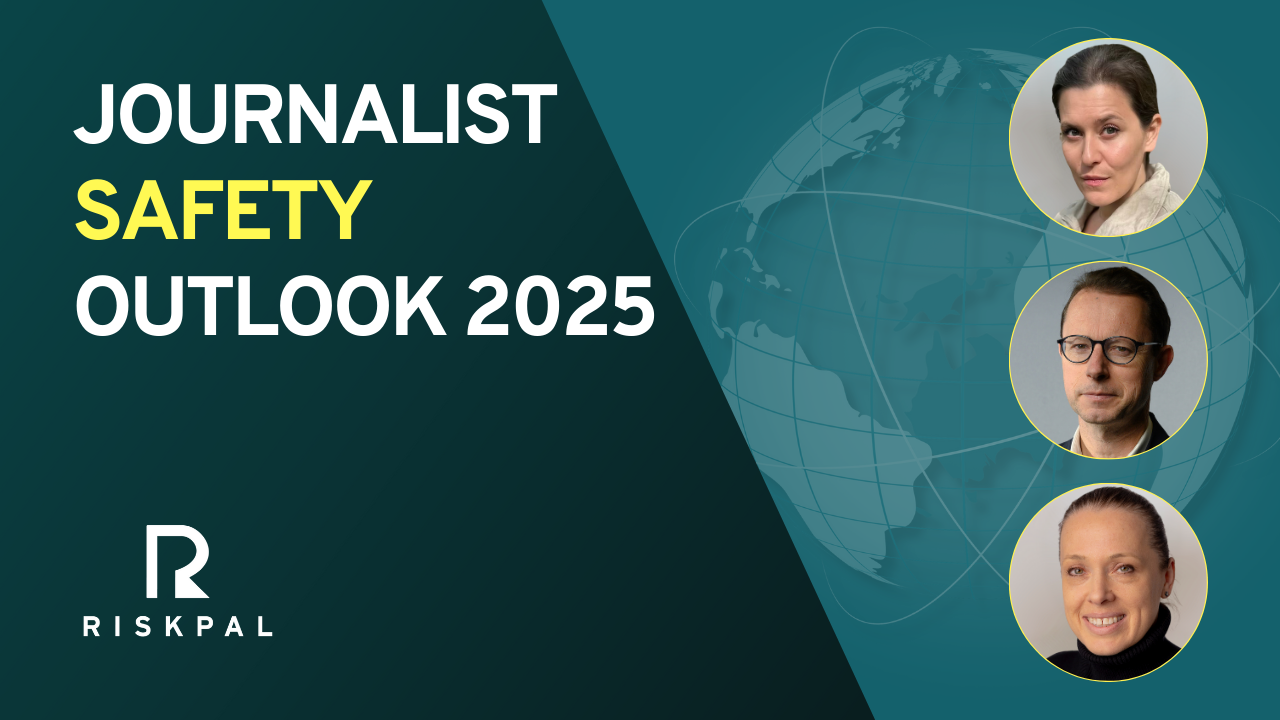
2026 Journalist Safety Outlook: A Year of Colliding Threats
The 2026 Journalist Safety Outlook panel was a frank, human conversation about what it takes to keep journalists safe — physically, digitally, legally and emotionally — in 2026, in a much tougher news environment.
Hosted by RiskPal, it brought together three people who see those pressures from different sides of the newsroom: Phil Chetwynd, Global News Director at AFP; Rana Ayyub, investigative journalist and global opinions writer at The Washington Post; and David Baum, General Counsel at The Atlantic.
Conflict Reporting and Physical Risk: Lessons from AFP
Phil spoke about how AFP has had to completely rethink safety after losing a colleague in Ukraine. For stories like Venezuela, where trouble was telegraphed in advance, they were able to prepare: running scenario exercises, planning extractions, moving protective gear into Caracas and using exiled Venezuelan journalists to reinforce from Colombia.
In far harder environments like Iran and especially Gaza, he said the newsroom has far less control. Communication blackouts, intimidation of local staff and near‑total exclusion of international media mean they have to rely on strong local managers, Farsi‑speaking teams, exile networks and, above all, much better preparedness.
That’s why AFP has poured resources into realistic planning, multi‑day combat first‑aid courses, cyber‑security support, and training on new threats like drones, updating older “Iraq/Afghanistan‑era” protocols so they match the way wars are actually fought today.
Online Abuse, Surveillance and Lawfare: Rana Ayyub’s Reality
Rana brought the reality of living this risk day‑to‑day in India, a democracy she says is sliding into authoritarianism. She described 15 years of deepfakes, doxxing, rape and death threats, surveillance on reporting trips and waves of court cases that now take up more of her time than journalism.
Standard guidance like “don’t feed the trolls” makes sense on paper, she said, but feels very different when lies about you trend in a country of more than a billion people and begin to define how strangers, officials and even judges see you.
To keep going, she prepares in layers: working closely with trusted lawyers, following digital‑security advice where she can, adjusting her movements when threats spike, and leaning on a small circle of colleagues and supporters — but she was clear that much of the burden still sits on her shoulders.
Legal Pressure and the Chilling Effect on Journalism
From his side of the Atlantic, David described an “age of capitulation” in which law is increasingly used to pressure newsrooms, and some organisations are too quick to fold. Beyond direct attacks on protections like the “actual malice” standard, he warned that routinely settling weak defamation cases quietly chills investigative reporting.
He outlined how The Atlantic approached the high-risk “Signal group” scoop, initially treating it as a potential disinformation trap and publishing only after its full verification process, including engagement with the White House and National Security Council.
While David was confident the story was protected speech, the greater concern was the use of other state tools — criminal investigations, regulatory pressure or immigration enforcement — in response to critical reporting. Recent cases of journalists detained at borders, deported, or subjected to device searches, alongside proposed visa rules tied to past reporting, show how real those risks have become.
At The Atlantic, this means that risk assessments now routinely factor in not only where a journalist is going but also their passport, visa status and how easy it would be for authorities to bar them from returning. Every foreign trip comes with detailed guidance on device security, communications and what to do at the border, and staff on temporary visas receive extra support because the personal consequences of a misstep are so high.
Safety as a Core Editorial Responsibility
Across their very different situations, all three came back to the same point: safety can’t be an afterthought or a box‑ticking exercise. It has to be woven into how stories are commissioned, how teams are trained, how threats are logged and answered, and how organisations stand beside their journalists when they come under fire.
How RiskPal Supports Journalist Safety
The themes raised throughout the Journalist Safety Outlook — from preparedness and threat tracking to legal, digital and immigration risk — reflect the challenges news organisations are grappling with every day. RiskPal works with media organisations, NGOs and universities to help embed safety into organisational workflows, providing a structured way to assess risk, plan mitigations, log threats and demonstrate duty of care across global teams. As these risks continue to collide, having a shared, organisation-wide approach to safety is no longer optional.